AI Automation Revolutionizes Small Business in 2026
AI Automation, Small Business Operations, 2026 Trends
How AI Automation is Transforming Small Business Operations in 2026
In 2026, AI automation has shifted from experimental add‑on to essential operational infrastructure for small businesses. With more than three‑quarters of small firms now using AI in some capacity, the competitive gap is no longer between those who use AI and those who do not—it is between those who deploy it strategically and those who merely dabble.

From Early Experiments to Everyday Infrastructure
By 2026, AI adoption among small and midsize businesses has accelerated dramatically. Surveys show that around 76% of small businesses now use AI, and 93% of them report a positive impact on their operations. Yet only a minority—roughly 14%—have deeply embedded AI into their core processes. The rest are still in fragmented pilot mode, running isolated tools for marketing, customer service, or bookkeeping without a cohesive automation strategy.
This gap matters. Businesses that treat AI as infrastructure—linked to goals, workflows, and governance—are emerging as “AI adoption leaders.” Research from Clutch indicates that these leaders align AI projects with revenue, productivity, and customer experience targets, rather than chasing novelty. In practice, this means they select a small, focused stack of tools, define clear metrics, and deliberately train staff to work alongside automation instead of around it.

Small firms that treat AI as core infrastructure report faster workflows and clearer visibility.
Narrow, Integrated Automations: The New Workhorses
The most transformative AI in 2026 is not the flashiest. It is the quiet, narrow automation that takes over specific, repeatable workflows with high frequency and low glamour: triaging inbound emails, updating CRM records, assembling weekly reports, or reconciling invoices. Analysts describe these systems as “narrow workflow operators”—agents designed to excel at one bounded task under human oversight.
For small businesses, integration quality now outweighs raw model sophistication. Owners care less about whether a model scores a fraction higher on a benchmark and more about whether it connects reliably to their email, accounting software, CRM, and e‑commerce platform. Logging, permissions, and audit trails are no longer “nice to have”; they are prerequisites for trust and compliance. This is why modern stacks are built around a general‑purpose large language model—such as ChatGPT Business, Claude for Small Business, Gemini, or Microsoft 365 Copilot—then extended with targeted tools for marketing, meetings, design, and finance.
Where AI Automation Is Reshaping Daily Operations
In 2026, AI automation is no longer confined to experimental pilots. It is actively running core operational functions, particularly in areas with clear and trackable impact:
- Customer communication and support: AI chatbots and email agents handle first‑line inquiries, appointment scheduling, and basic troubleshooting, escalating only complex cases to humans. This frees staff to focus on high‑value conversations while maintaining rapid response times.
- Marketing and content generation: Nearly 60% of small businesses now use AI to write posts, ads, and email campaigns, as well as to optimize targeting and timing. Generative AI has effectively become a “marketing sidekick,” compressing days of creative work into hours while preserving brand voice.
- Analytics and decision support: AI tools synthesize sales, web, and customer data into concise, actionable summaries. Instead of poring over spreadsheets, owners receive natural‑language briefings—“top‑selling products this week,” “at‑risk customers,” or “inventory items approaching stock‑out.”
- Back‑office operations: Bookkeeping assistants auto‑generate invoices, categorize expenses, and flag anomalies. Inventory agents forecast demand, recommend reorder points, and even trigger purchase orders within predefined limits.
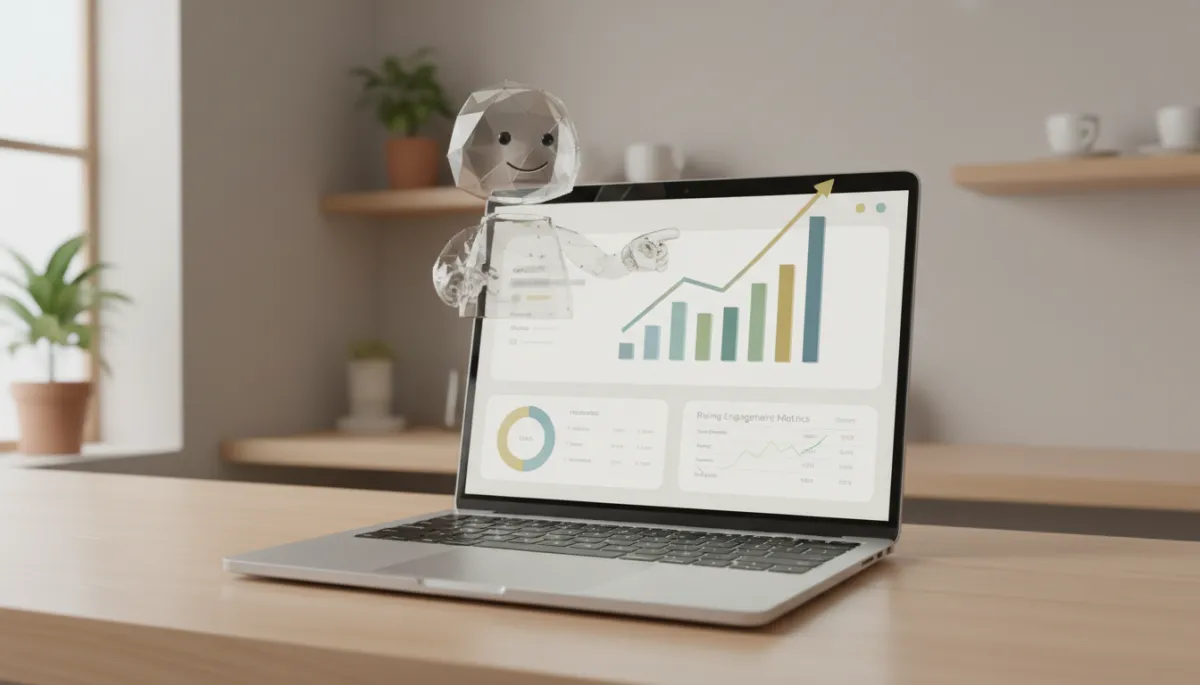
Generative AI now drafts campaigns, tests variants, and surfaces what actually drives revenue.
Productivity Gains, Real but Measured
The impact of AI automation is tangible, but nuanced. Around 74% of small business leaders report improved productivity after adopting AI, yet most place those gains below 25%. In other words, AI is not eliminating work; it is reallocating it. Employees spend less time on repetitive tasks and more time on relationship‑building, problem‑solving, and strategic planning—activities that AI cannot fully replicate.
Customer growth tells a similar story. One recent report found that AI‑using small businesses saw roughly 50% growth in customer numbers over a six‑month period compared with non‑users. However, barriers persist: concerns about data security, the accuracy of AI outputs, and lack of in‑house expertise remain significant. Owners who achieve the strongest ROI are those who pair automation with clear policies, human review checkpoints, and continuous training.

AI delivers incremental but compounding gains when owners track time saved and revenue impact.
The Rise of the Digital Workforce: AI Agents as Team Members
A defining shift in 2026 is the arrival of agentic AI platforms designed specifically for small businesses. Tools like Meta’s Muse for Small Business and OpenAI’s Dots operate as “always‑on” digital staff. You assign them goals—“monitor our online reviews,” “optimize our ad spend,” “prepare weekly cash‑flow snapshots”—and they act continuously across your existing software stack, always routing final approvals through a human.
Pricing has become accessible. Business‑grade AI seats typically cost around $20 per user per month, and most small firms operate with a lean stack of about five tools: one general LLM plus four workflow‑specific solutions. The strategic question for owners is no longer “Can we afford AI?” but “Which tasks should we delegate to our digital workforce, and how will we measure success?”

AI agents now function as persistent team members handling defined operational responsibilities.
Building an AI-Automated Operation: Practical Steps for 2026
To harness AI automation effectively in 2026, small business leaders should adopt a disciplined, staged approach:
- Start with one high‑friction workflow. Identify a repetitive, rule‑bound process that consumes hours each week—such as lead follow‑up, invoice creation, or social content scheduling—and target it for automation first.
- Anchor on a core AI platform. Choose a general‑purpose LLM that aligns with your ecosystem (Google Workspace, Microsoft 365, or standalone) and privacy requirements, then add tools only when they clearly complement that core.
- Insist on integration and observability. Prioritize solutions that plug directly into your CRM, accounting, and communication tools, with clear logs, permissions, and rollback options so you can audit every automated action.
- Measure outcomes, not activity. Track concrete metrics—hours saved, error rates reduced, leads converted, customer retention improved—rather than just counting AI prompts or tasks executed.
- Invest in people and policy. Document how AI is used, where human review is mandatory, and how staff should escalate issues. Train employees to treat AI as a collaborator, not a black box.
The businesses that will lead their markets by the end of 2026 are not those with the most AI tools, but those with the clearest automation strategy. They will know which tasks belong to humans, which belong to machines, and how to orchestrate both in a single, coherent operating system for growth.
SEO Title: How AI Automation Is Transforming Small Business Operations in 2026
SEO Meta Description: Discover how AI automation is reshaping small business operations in 2026—from narrow workflow agents and digital workforces to marketing, analytics, and back‑office automation—plus practical steps to build a lean, high‑ROI AI stack.
